Circular Coated Fabrics

Request Information
Please sign in first or register for free to contact Avans Hogeschool.
- story by MaterialDistrict
Each year in Western Europe, more than 4,000 tonnes of protective film used in construction and agriculture end up in landfills or incinerators. These films consist of a textile reinforcement with a plastic coating that cannot be separated, making high-quality recycling impossible. This results in the loss of valuable raw materials and high CO₂ emissions. The Circular Coated Fabrics (CCF) project, carried out by the research group Nieuwe Materialen en hun Toepassing at Avans Hogeschool in collaboration with the SME AerO Coated Fabrics, investigated how temporary protective films can be made circular.
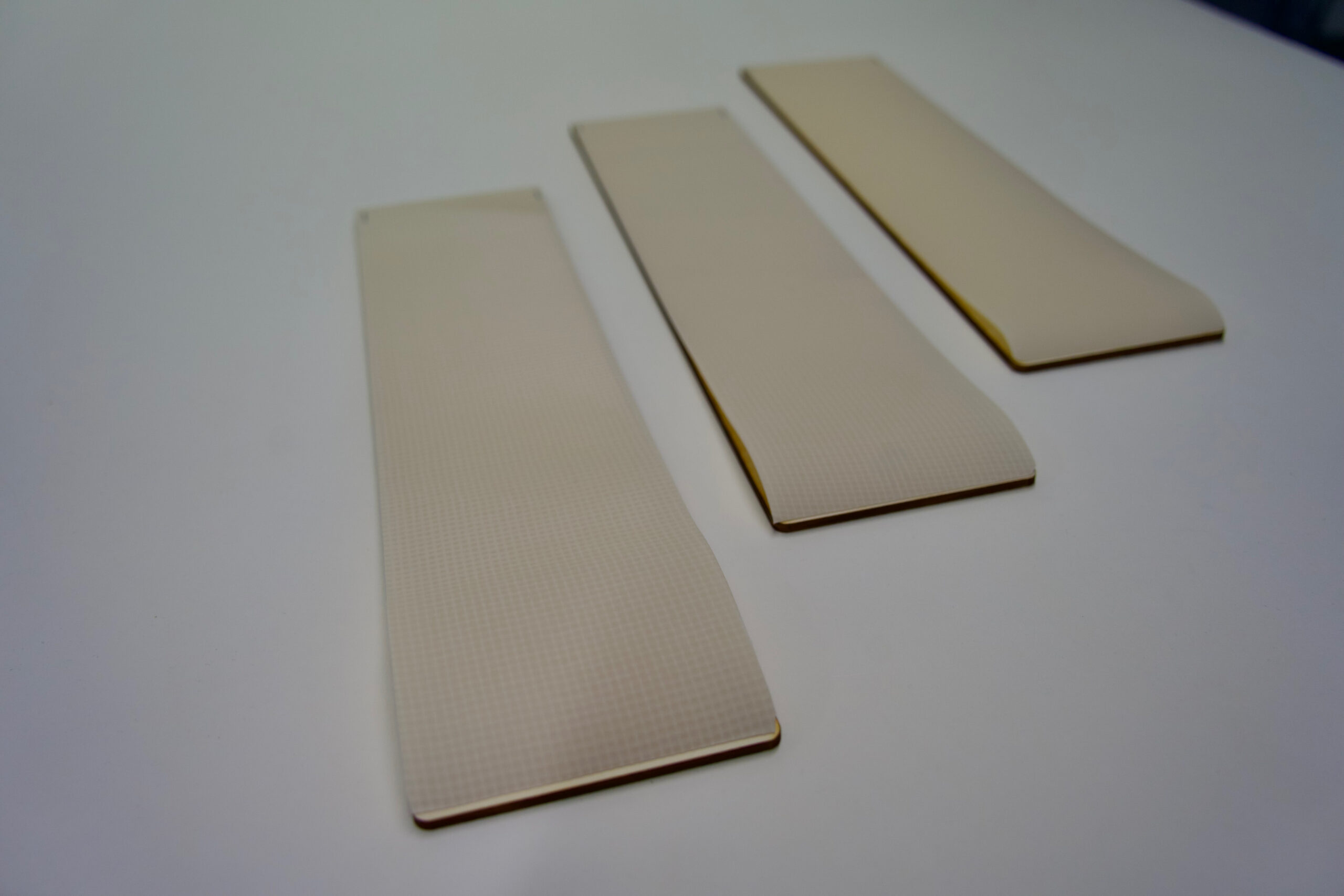
The presented material is the core innovation of this project: a replacement of the traditional fossil-based coating with poly(lactic acid), a biobased plastic that is chemically recyclable. The objective was to demonstrate, within one year, the technical feasibility of a PLA-coated film that can be converted after use into high-quality raw materials through an environmentally friendly recycling route (alcoholysis).
During the project, a PLA-based compound suitable for extrusion coating was developed. Using this compound, protective films were produced based on PP woven fabric, with mechanical properties comparable to those of conventional films. Coating trials on industrial equipment were carried out without processing issues. Laboratory tests demonstrated that PLA can be fully depolymerized into valuable building blocks, such as benzyl lactate, which can be reused as a raw material or as a green solvent. In addition, initial steps were taken to test PLA woven fabrics and variants with specific functional properties.
These results demonstrate that circular protective films are technically feasible. Follow-up research focuses on improving mechanical properties, ageing resistance, and upscaling. The application of PLA coatings can lead to a significant reduction in CO₂ emissions and contributes to closing the materials loop in the construction sector.
Find our more here.